Sightseeing around the Lagoon
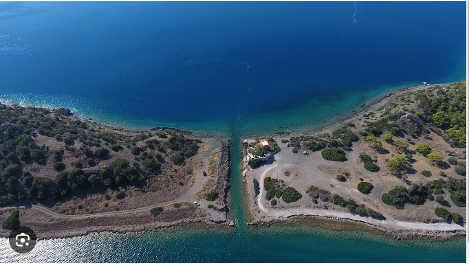
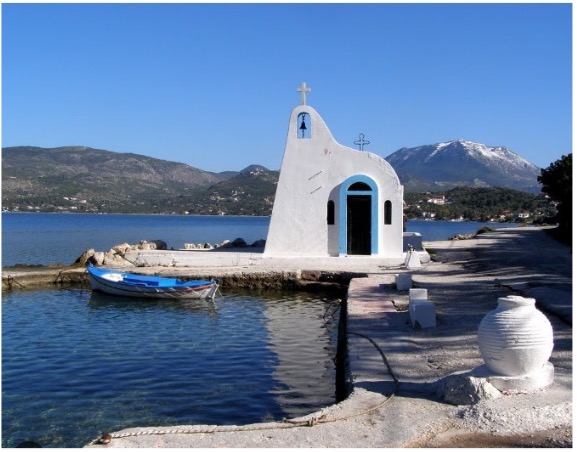
Visit the picturesque chapel of Agios Nikolaos or the water-releasing canal to the Corinthian Gulf and enjoy good food, drink or coffee with a backdrop of paradise.
Melagavi Lighthouse
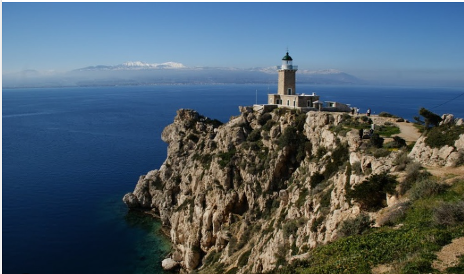
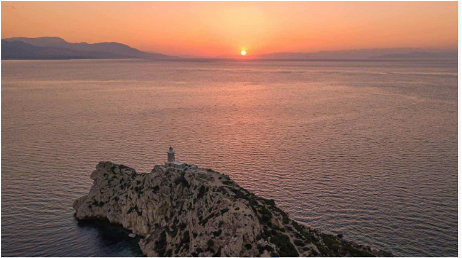
The Melagavi lighthouse, also known as Heraion lighthouse, was built in 1897 on the Agrilaos peninsula, in the golf of Alkyonides Islands. In 1947, the building was renovated and repaired. Its outline is T shaped, and it has a rectangular light tower. It is made of stone and it constitutes a typical example of classical lighthouse architecture.
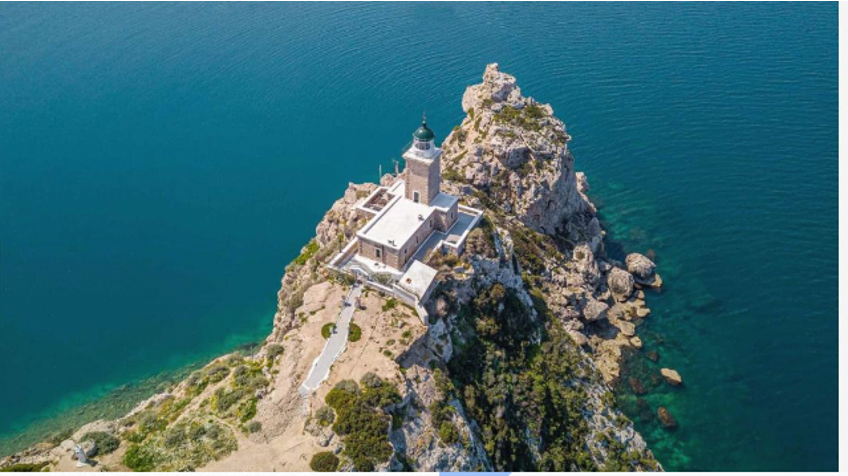
Melagavi is considered to be one of the 10 most beautiful lighthouses in Greece and it is also one of the most photographed landmarks by travelers with thousands of posts on Social Media like Instagram and Tumblr. Definitely worth a drive by … interior is not always open, but you can always visit the outside and admire the peninsula.
St Nicholas chapel on the cliff
East of the archaeological site of the sanctuary of Hera Akraia in Heraion of Perachora, there is an imposing, wild, steep and rocky hill. At the top of the hill which was a natural citadel. In ancient times, the Corinthians who controlled the area built a frictoria (facility for communicating and spreading messages and news through signals with fires from burning torches during the night) in a position which was opposing and within eyesight from the ancient city of Corinth.
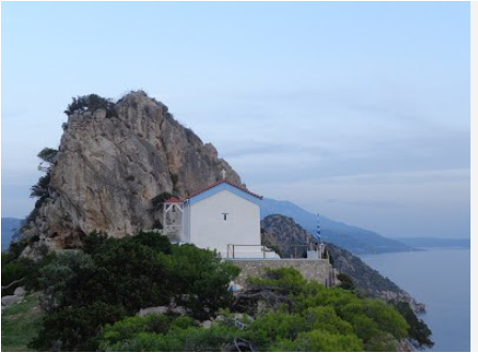
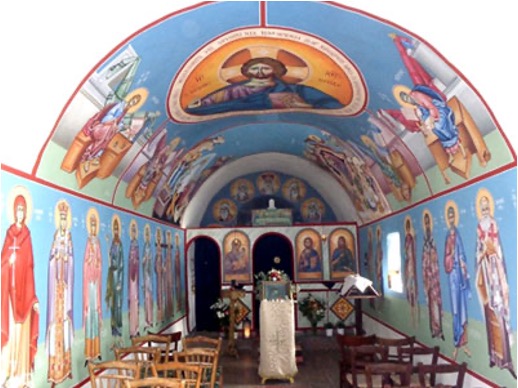
To this day, traces of the foundations of the structures are still standing, as well as the retaining walls built on the sloping hill, carved by ancient craftsmen. This sanctuary provides a strategic vantagepoint, stretching south and west from the Gulf of Corinth to the bay of Alcyonides and the sea of Kalanisos in the north – both important sea routes of communication – but also onto the land passages in the east from Sterea Greece to the Peloponnese. You will see a sign pointing to St Nicholas chapel on the left as you are driving to the Heraion archaeological site and Melagavi lighthouse. A small, winding path upwards will take you to the chapel.
The Heraion temple – a gorgeous place to swim
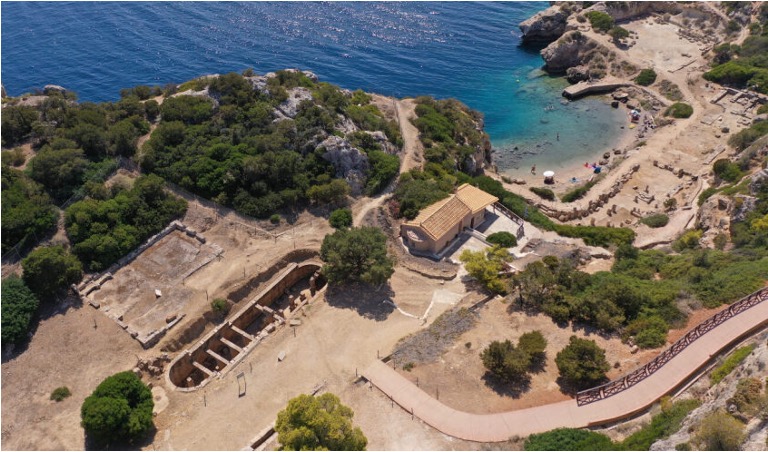
The archaeological site of Heraion is located 15 kilometers to the northwest of Ancient Corinth, at the end of the Perachora peninsula. Excavations carried out in the region have unearthed the Temple of Hera and substantial remains of the early Corinthian civilization, such as an L-shaped stoa, a large cistern, dining rooms and a smaller temple.
The Temple of Hera is the largest and most significant monument of the site. It lies near a small harbor under the lighthouse of Melagavi. The region was an important part of Corinthian land during the early roman period. The findings in Perachora provide valuable clues about the development of Corinthian art from the geometric and archaic period.
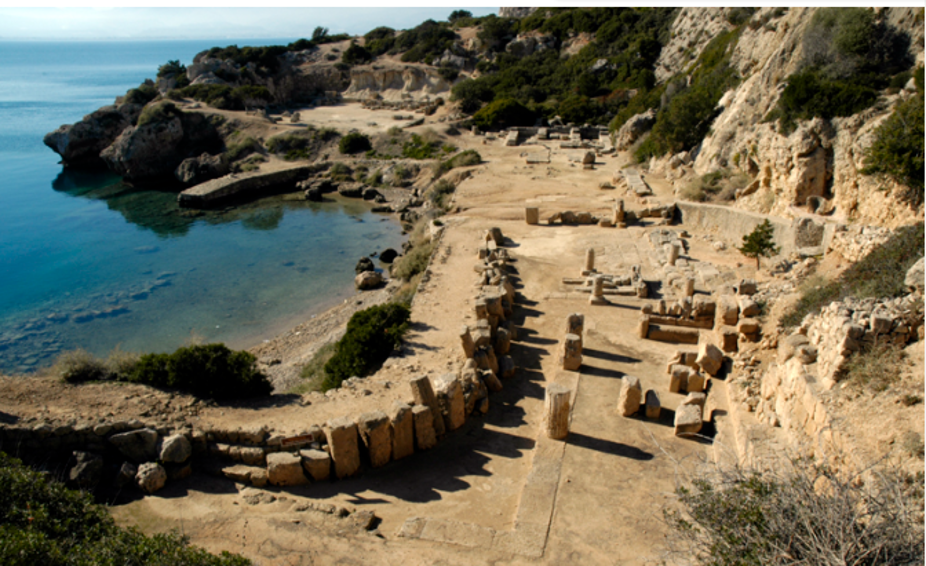
Excavations (1930-1933) were carried out at the site of Heraion and the temple of Hera Akraia – above the harbor, and Hera Limenia, by the harbor. The archeological digs extended to Vouliagmeni lake, and the archeologists found remains that date back to the Neolithic, early Helladic and Mycenaean age. It is believed that a significant town called Heraion existed on the site. The findings in the area indicate that the town Oinoi was located in the area of Schoinos, and that the settlement of Therma was located in the modern town of Loutraki.
Although there is a difference in opinions between Argos, Megara and Corinth as far as the control of the site, it is likely that the sanctuary was under the control of Corinth since the entrance to the sanctuary was oriented towards the ancient harbors of the town. Domestic structures were built in the region during the roman period, attesting that the site was no longer used as a sanctuary.
It was at the Heraion that, according to the myth, Medea buried her murdered children as she was leaving Corinth. In the 1st century B.C., the Greek historian Strabo mentioned the existence of an oracle in the sanctuary.
At present, the known structures of the sanctuary cover an area of approximately 45×245 meters that comprises of a small gulf and extends to the east along the ridge.
At the southwest side there is a polygonal area of 25 x25 meters hewn into the rock. Many archaeologists believe it is the ancient Agora. It dates back to the 6th century B.C. and it is considered to be contemporary with the temple of Hera Akraia. The name Akraia (dwelling on the heights) refers to the location of the sanctuary at the point of the peninsula. It was probably destroyed in the 4th century B.C. and its use was replaced by the Stoa. In the middle of this area there are ruins of a roman house. The oldest structure (late 9th century B.C.) at the site is an apsidal construction which is thought to resemble the temple-house models known from the Argive Heraion.
To the west of the apsidal construction, there was a Doric order tetrastyle – prostyle temple built in the 6th century B.C. It is considered to be of an unusual design as its cella was divided in three aisles. There was a wall to separate the west end of the cella. Its roof was made of marble. Evidence from the use of certain construction material might indicate that there was a prior phase of the structure in the 7th BC.
In the southern side of the temple, there was a 4.5meter diameter limekiln. Scorch marks remain visible on the stones. Fifteen meters to the east of the temple there was an altar (25 x 4 meters) decorated with triglyphs and metope friezes that was built in the early 4th B.C. In the late 4th century B.C. Ionic columns were added to the corners.
To the east of the altar there was a two storied L-shape stoa that dated to the late 4th century B.C. The dimension of the eastern arm of the stoa was 16.55×5.5 meters, while the northern arm 17.5×5 meters. The ground floor had Doric columns and the upper floor Ionic. It is the first example of the combination of the two orders.
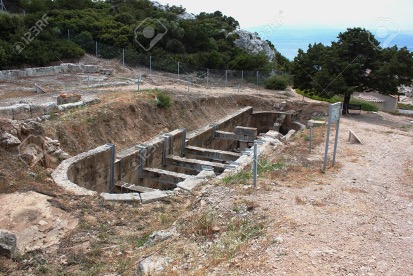
Approximately 35 meters east to the stoa there was a double apsidal cistern (6 × 21 meters). Internal piers supported the vaulted roof. At the eastern end of the cistern there was a settling tank (3×5 meters) while the water diversion point was located 10 meters to the northeast. According to the excavations, the cistern dates within the 6th to the 4th centuries B.C.
To the south of the cistern was a double dining room. The construction was initially identified as a Hellenistic house, but remains of dining couches reinforce the belief that the construction was used as a dining room that dated back to 490 B.C.
Approximately 75 meters to the east of the cistern lay the remains of a construction that dates to the 6th century B.C. A bronze bull with a Sikyonian inscription, which dates to the late 6th century, was found at the site. The construction served as a house-temple as attested by a hearth located at the center.
750 meters north east of the sanctuary there was a row of cisterns accessible by a 50 meter rock cut staircase. The descent is steep and the stairs are not well preserved.
540 meters to the northeast of the sanctuary, there was a hexastyle fountain contemporary to the stoa. Behind its façade there were three rock-cut basins similar to the Peirene fountain in Ancient Corinth. The construction was later transformed to a roman villa. Water channels connect the cisterns with the fountain and the fountain with the Sanctuary and Stoa cistern. Along the water channels there were settling basins, including one above the fountain.
The Heraion is significant for the study of the temple architecture and of the rural cult in the region of Corinthia. The unusual plan, the location and the remains of the 9th century B.C. apsidal construction are of interest for the study of the evolution of the temple as rural or cult architectural form. The reference of the Greek traveler Strabo to an oracle and the myth concerning Medea’s children suggest the existence of chthonic elements in the cult of Hera Akraia. This suggestion has not been generally accepted.
Loutraki Thermal Spa
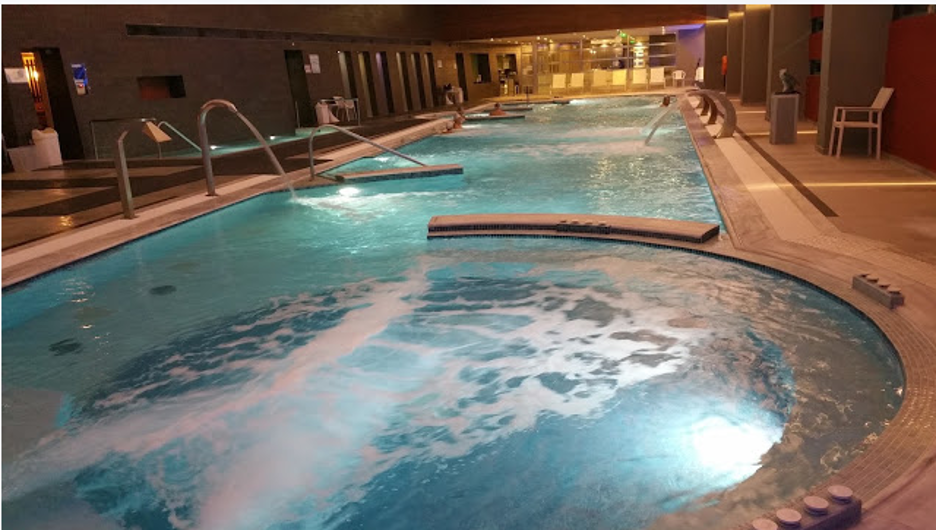
The facilities of LOUTRAKI THERMAL SPA include:
2 indoor heated pools with waterfalls and jet hydro massaging (underwater massage) and respectively, indoor swimming pool cooling water for post-traumatic problems.
1 outdoor pool with water mushroom hydro massaging with waterfall and pool bar, 4 individual cabins with baths hydrotherapy, 3 double cabins with baths hydrotherapy, Sauna , Steam Bath/Hamam, 2 spaces sprinkler distance, 2 spaces thin rain shower, Halls and beauty, Meeting individual massage.Yoga Room, Cafeteria & Spacious reception rooms and rest.
Hydrotherapy
Known since ancient times, the beneficial properties of Loutraki Thermal Waters, are recommended for: Rheumatoid and Rheumatoid arthritis, Osteoarthritis and Osteoporosis, Sciatica, Musculoskeletal complaints, disc disease, Cervical Syndrome, Skin disorders, Gynecological disorders.
Healing Water Therapy
Apart from the bathing in LOUTRAKI THERMAL SPA, visitors can taste the miraculous Loutraki healing water. The effect of Drinking therapy is multidimensional and it is recommended for: Nutrition Disorders, gall and kidney stones, as well as diseases of the urinary system.
Sessions & Treatments
Experience wellness, health and beauty with Wellness Treatments & Massage Techniques, Body Wellness & Invigoration Treatments, Facial Treatments to Invigorate & Enhance your Complexion.
Ancient Nemea
Nemea is an ancient site in the northeastern part of the Peloponnese, in Greece. Formerly part of the territory of Cleonae in ancient Argolis, it is today situated in the regional unit of Corinthia. The small village of Archaia Nemea (formerly known as “Koutsoumadi” and then “Iraklion”) is immediately southwest of the archaeological site, while the new town of Nemea lies to the west.
Here in Greek mythology Heracles overcame the Nemean Lion of the Lady Hera, and here during Antiquity the Nemean Games were played, in three sequence, ending about 235 BC, celebrated in the eleven Nemean odes of Pindar.
The Temple of Nemeios Zeus
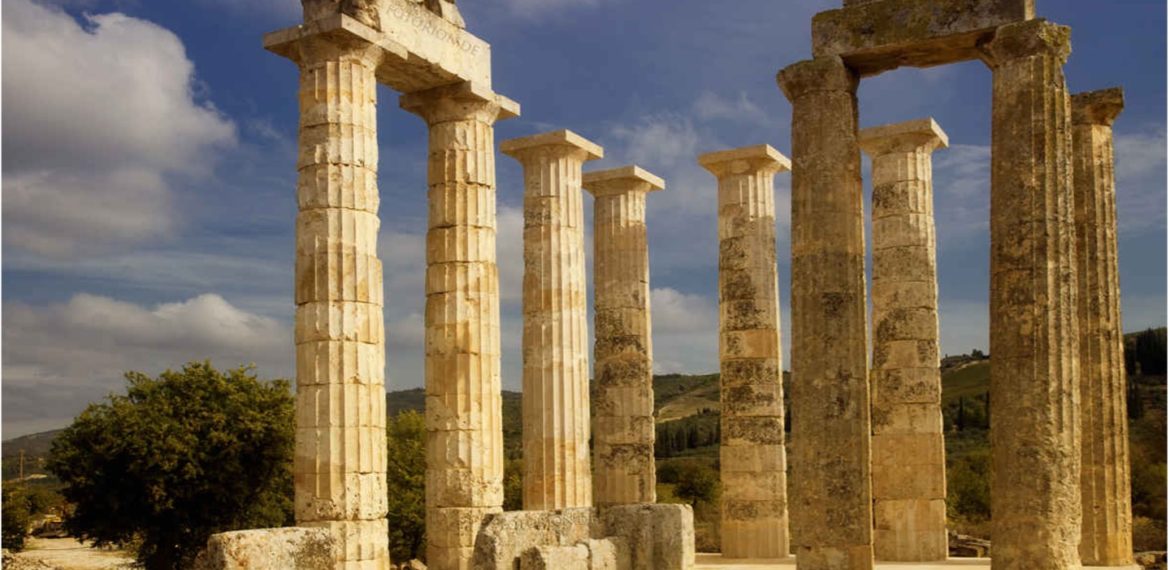
The temple of Nemeios Zeus (330 BC) which was built with tufa on the ruins of an older archaic temple. A combination of three ancient Greek architectural styles was applied (Ionic, Doric and Corinthian Orders). The foundations are 44.5m. long, and 22m. wide. The temple is situated at the centre of the holy grounds, dedicated to Zeus, that included a number of buildings and monuments. During the excavations (1973 – 2004) the sanctuary of Zeus was unearthed (east of the temple entrance), as well as bath facilities, the foundations of a large hostel and the Shrine of Opheltes.
The Stadium of Nemea
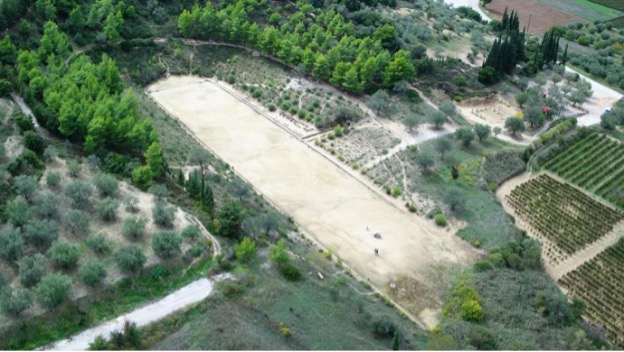
The Stadium (320 BC) which had a seating capacity of 40,000 and is impressive on account of both its location and size. The domed stoa with inscriptions on it still stands; this used to be the entrance point for the athletes as well as the starting point for the games.
Nemean Games
Nemean Games, in ancient Greece, athletic and musical competitions held in honour of Zeus, in July, at the great Temple of Zeus at Nemea, in Argolis. They occurred biennially, in the same years as the Isthmian Games, i.e., in the second and fourth years of each Olympiad. Their origin was attributed to such legendary figures as Heracles and Adrastus of Argos. The presidency of the games was held by the city of Cleonae until about 460 bc, thereafter by Argos.
Winner in the competitions were awarded a wreath of fresh wild celery. After 573 bc the games were open to all Greeks, and the Nemea became one of the great panhellenic festivals. A group of archaeologists from the University of California, Berkeley, which began work at Nemea in 1973, discovered the remains of a stadium on a hillside near the temple.
Here in Greek mythology Heracles overcame the Nemean Lion of the Lady Hera, and here during Antiquity the Nemean Games were played, in three sequence, ending about 235 BC, celebrated in the eleven Nemean odes of Pindar.
The Archaeological Museum
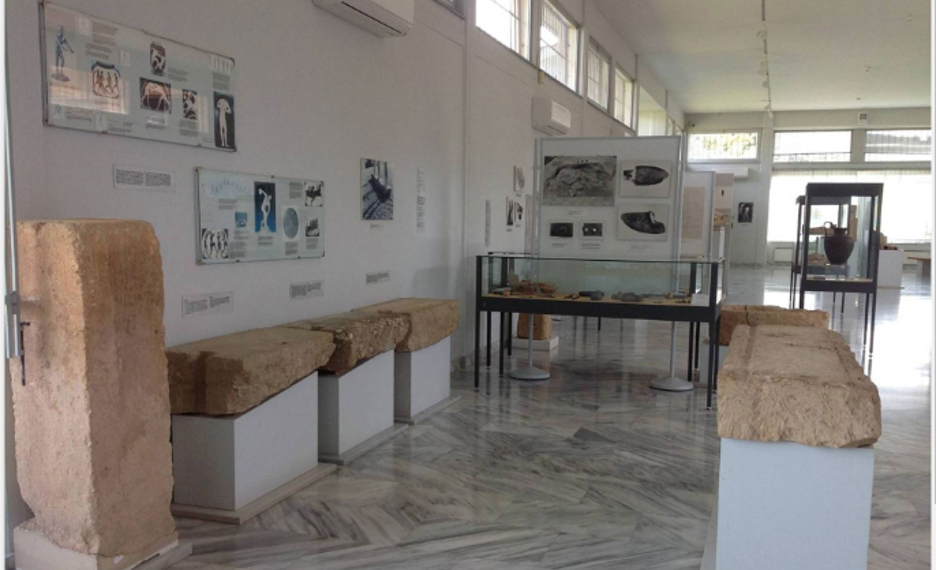
The Archaeological Museum located within the site. A wide variety of significant exhibits are on display there, the most important of which is “the Aidonia treasure”, an amazing collection of 312 seals and pieces of jewellery, unearthed from the Mycenaean necropolis of Aidonia (16th – 15th c. BC).
The lion of Nemea
The Nemean Lion was a legendary creature in Greek mythology that ravaged the area of Nemea. Its fur was impenetrable by the weapons of humans and hence, was unstoppable. It was considered to be the child of Typhon and Echidna, father and mother of all monsters. Other accounts mention Zeus and Selene as its parents.
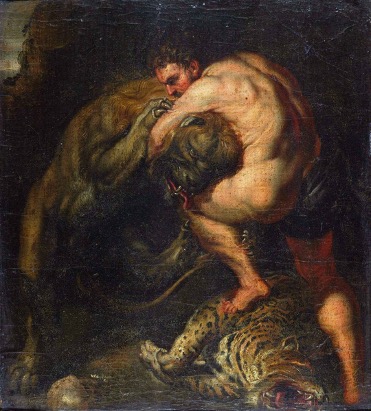
Slaying the Nemean Lion was the first task that King Eurystheus asked of the demigod Heracles during the myth of the Labours of Heracles. One version has it that the lion kidnapped women from Nemea and kept them in its lair, in order to lure warriors. When the brave warrior would see the woman, she would turn into a lion and kill him. Heracles reached a nearby city, where he met a young boy; the boy told him that if he killed the lion within thirty days, then a lion would be sacrificed to Zeus. Otherwise, the boy would sacrifice himself.
Heracles tracked down the lion and tried to kill it by shooting arrows. He realised though that it was no use because of its impenetrable fur. He then waited until the lion entered its lair from one of the two entrances. He then blocked off the second entrance, and entered the cave as well. There, he managed to kill the lion by strangling it with his bare hands. He then tried to remove the skin from the lion but his knife was unable to cut it. After a lot of effort, the goddess Athena decided to help him, and told him to use one of the lion’s claws to skin the creature. Heracles emerged victorious on the thirtieth day after he had met the boy.